
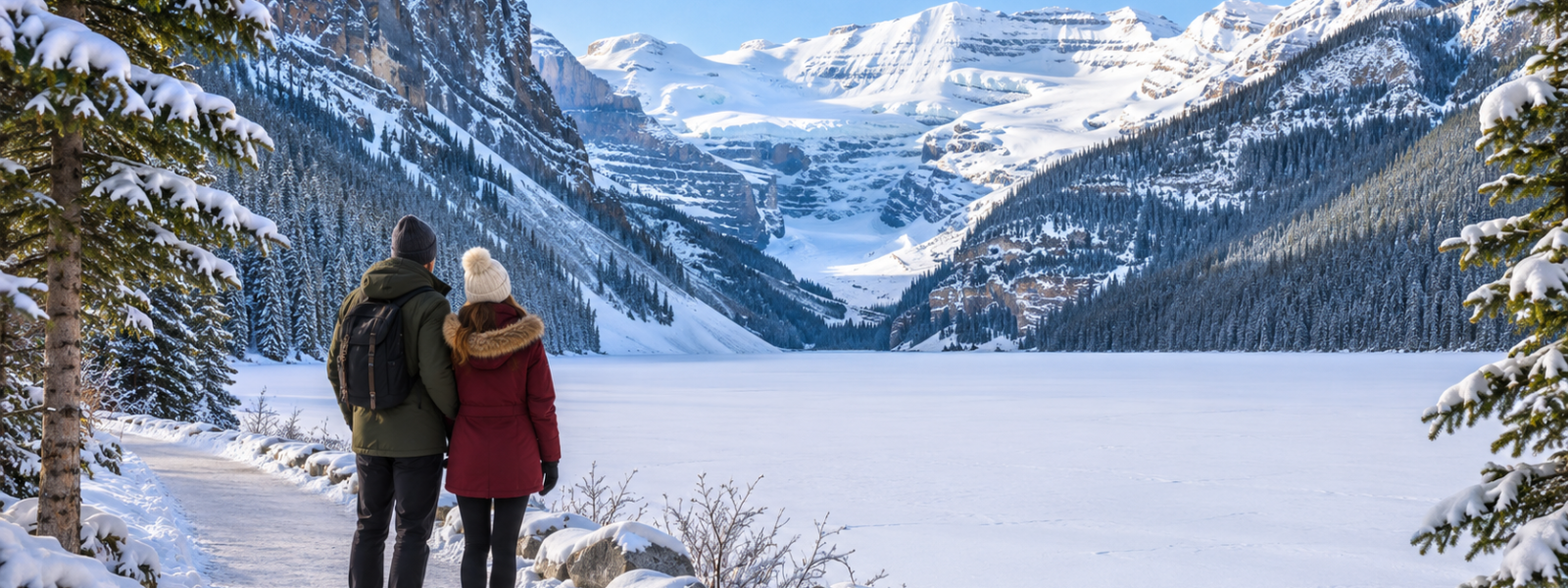
You do not need to ski to enjoy Lake Louise in winter. A good visit can be built around mountain views, photographs and a short outdoor experience followed by a warm break. The important adjustment is to plan for the winter landscape you will actually encounter, rather than the turquoise-water photographs that dominate summer travel guides.
Decide how long your group is comfortable spending outdoors before choosing the rest of the day. Someone who enjoys photographing snow-covered scenery may want longer than a visitor who mainly wants to see the lake and return to warmth.
Make the lakeshore the main event
Start with a simple plan to view the lake from an accessible shore area that is open at the time. You do not need to cross the lake or complete a long route to appreciate the mountain setting. Build in pauses so people can adjust clothing and footing without feeling hurried.
A view on a clear day and a view during snowfall are different experiences. Do not make a particular photograph the measure of whether the trip succeeded. Visibility, wind and conditions can change the length of the visit you want.
Do not assume frozen water is a walking surface
Parks Canada says it does not monitor natural ice surfaces for safety or mark their hazards. A frozen appearance, footprints or other visitors on the ice are not reliable permission to follow. Keep your sightseeing plan useful without depending on natural-ice access.
If you want a specific activity, check the relevant operator’s current arrangements separately. Skating, rentals and guided experiences should not be described as included simply because the lake appears on a tour itinerary.
Choose walks using winter information
A short-looking summer route can have very different winter conditions. Consult the official winter walking information and current trail reports, and respect closures. At Lake Louise, routes towards the back of the lake can involve avalanche exposure; do not extend a casual shore visit into unfamiliar terrain.
For a first sightseeing trip, it is reasonable to stay with a modest outing and leave more demanding routes for another visit with appropriate preparation. The group’s comfort should set the route, not the ambition of the most confident person.
Pack for standing still as well as walking
Warm layers, insulated footwear, gloves and a hat are useful because sightseeing often involves standing rather than generating heat through continuous exercise. Carry a spare layer and keep small items easy to reach. If using traction aids, choose equipment appropriate to the surface and follow local advice.
Protect your phone or camera from the cold between photographs. A charged power bank can be useful, but avoid letting photography distract you from footing or the group’s agreed meeting time. Children may need more frequent warm breaks than adults expect.
Keep the rest of the day short
Choose a realistic meal or warming stop, checking opening hours and whether reservations are needed. Hotel dining and other indoor facilities are not automatically available to every visitor without restrictions. Have an alternative rather than relying on one unconfirmed venue.
If your trip starts far away, remember that the return drive still follows the lakeshore visit. Our Banff and Lake Louise day tour from Edmonton is a long-distance option to enquire about, not a short local transfer. Discuss the winter itinerary and how much time is planned at the lake.
Would an overnight stay suit you better?
A night in the mountains can make sense if you want less travel in a single day or a more flexible sightseeing schedule. Compare the overall rhythm rather than only the headline price. Read our Lake Louise guide for broader context, then choose the season-specific activities that suit your group.
Arrange a winter sightseeing enquiry
View the Edmonton day-tour page or ask about a suitable winter itinerary. Provide your departure city, dates, ages and walking preferences. Confirm the actual stops and any optional activities before booking; snow, ice conditions and particular views cannot be guaranteed.
Useful planning sources
Access and services can change. Check these official resources for your travel dates.